
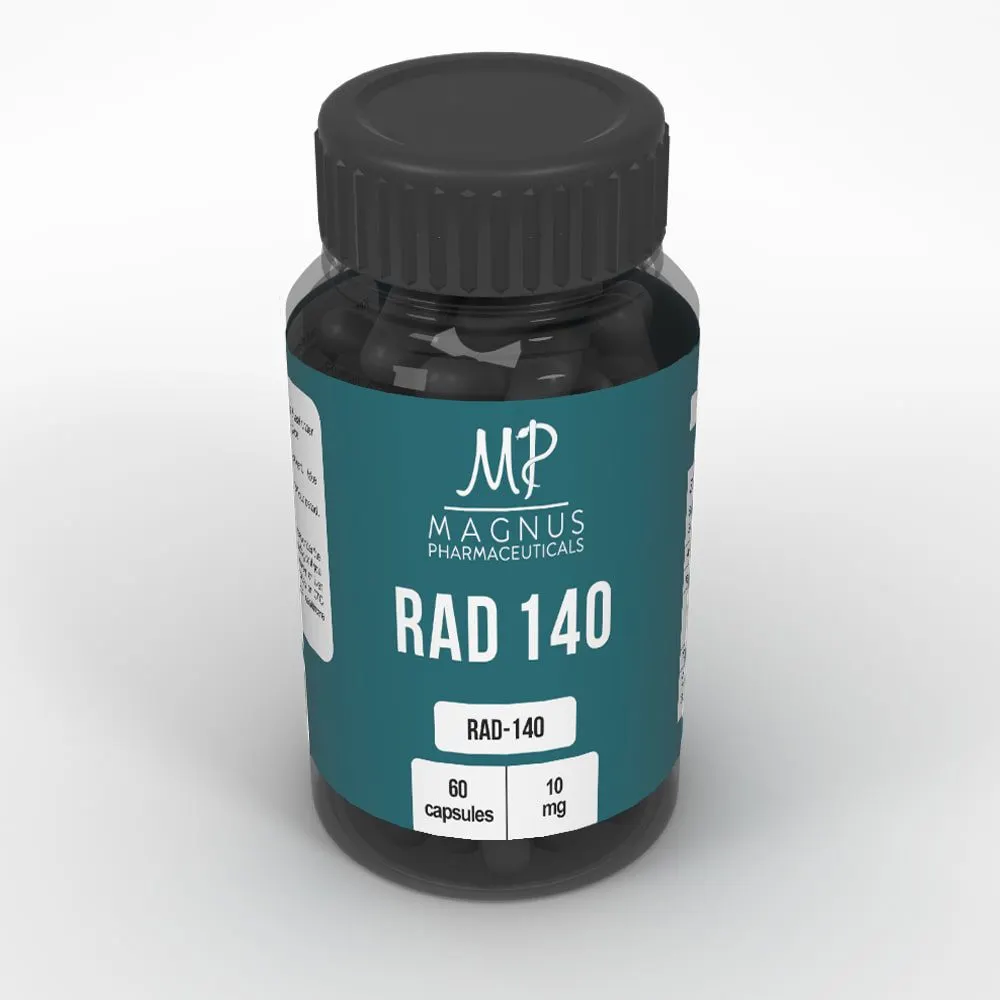
Peptide / Growth Hormone
RAD-140
RAD-140, widely recognized in performance research circles as Enobosarm or Radarine, is a selective androgen receptor modulator (SARM) designed to target specific tissues. Unlike traditional anabolic steroids, it aims to provide anabolic effects with a reduced impact on non-target organs. In athletic and research contexts, it is primarily utilized for lean mass accumulation and fat loss during cutting phases. Users report that it offers a favorable balance between muscle preservation and metabolic enhancement. As a research compound, it is not approved for human consumption by the FDA. Athletes typically use it to maintain muscle mass while in a caloric deficit. This guide outlines the pharmacology, typical protocols, and safety considerations for RAD-140 use in controlled research settings.
Drug Class
Peptide / Growth Hormone
All Products
1 products
Legal status
Research compound (not FDA approved)
All Products — RAD-140
How RAD-140 Works
RAD-140 functions as a selective androgen receptor modulator, meaning it binds to androgen receptors in muscle and bone tissue with high affinity. This selectivity allows it to stimulate protein synthesis and cell growth in skeletal muscle while minimizing androgenic side effects in other organs. The compound does not convert to estrogen or dihydrotestosterone, which distinguishes it from traditional anabolic steroids. In preclinical studies, Enobosarm demonstrated significant anabolic activity in muscle tissue models. It works by stabilizing mRNA and enhancing the translation of muscle-specific proteins. The mechanism is tissue-specific, relying on the differential distribution of androgen receptors. This selectivity is the primary reason researchers investigate it for conditions like sarcopenia. However, human clinical data remains limited. Users report that the effects are gradual, typically becoming noticeable after two to three weeks of consistent use. The pharmacokinetics involve oral administration with good bioavailability. It is metabolized by the liver but does not appear to cause significant hepatotoxicity at standard research doses. Understanding this mechanism is crucial for designing safe research protocols.
Typical Research Applications
In the realm of performance research, RAD-140 is most commonly associated with cutting cycles. Athletes use it to preserve lean muscle mass while adhering to a caloric deficit. The compound is believed to enhance nitrogen retention, which helps prevent muscle catabolism during weight loss. It is also used in recomp phases, where the goal is to lose fat while simultaneously gaining lean tissue. Users report that Radarine provides a clean look and improved vascularity without significant water retention. It is less commonly used for pure bulking, as its anabolic potency is lower than traditional steroids. However, it can be stacked with other compounds to enhance overall anabolic effects. Some researchers use it to improve strength and power output, particularly in high-intensity training environments. The compound is also investigated for its potential to improve bone density, which is relevant for athletes with high impact loads. It is important to note that these applications are based on anecdotal reports and preclinical data. Individual responses may vary. Always consult with a healthcare professional before starting any research protocol. The primary application remains the maintenance of muscle mass during aggressive fat loss.
- Cutting cycles for muscle preservation
- Recomposition phases for lean gain
- Strength and power enhancement
- Bone density support in high-impact athletes
Dosage Ranges + Cycle Length
Research protocols for RAD-140 typically range from 10 mg to 20 mg per day. Intermediate users often start at 10 mg daily to assess tolerance, while advanced users may use 20 mg daily for more pronounced effects. The standard cycle length is 8 to 12 weeks. Cycles longer than 12 weeks are not recommended due to the potential for increased side effects and receptor downregulation. It is crucial to maintain a consistent daily intake, as Enobosarm has a half-life that supports once-daily dosing. Some users split the dose into two administrations to maintain stable blood levels, though this is not strictly necessary. Stacking RAD-140 with other SARMs or steroids is common in advanced protocols. For example, it is often paired with LGD-4033 for enhanced anabolic effects. Post-cycle therapy (PCT) is generally recommended after cycles longer than 8 weeks. A standard PCT might include Nolvadex or Clomid for 2 to 4 weeks. Blood work should be conducted before, during, and after the cycle to monitor liver enzymes and lipid profiles. Do not exceed 20 mg daily without medical supervision. The goal is to find the minimum effective dose for individual research objectives.
Side Effects + Safety Considerations
While RAD-140 is considered safer than traditional anabolic steroids, it is not without risks. The most common side effect reported is the suppression of natural testosterone production. This suppression can range from mild to moderate, depending on the dose and duration of use. Users may experience mood changes, irritability, or decreased libido during the cycle. Hair loss is a potential concern, particularly for individuals predisposed to androgenetic alopecia. Although Radarine does not convert to estrogen, it can still affect the endocrine system. Liver stress is less common but should be monitored through regular blood tests. Lipid profiles may be altered, with potential decreases in HDL cholesterol. It is essential to use RAD-140 responsibly and within established research guidelines. Post-cycle therapy is critical to restore natural hormone production. Blood work should include testosterone, estradiol, liver enzymes, and lipid panels. Individuals with pre-existing liver or cardiovascular conditions should avoid use. The compound is not approved for human use, so quality control is a significant concern. Source only from reputable suppliers with third-party testing. Always prioritize safety and long-term health over short-term performance gains.
Mechanism of action
RAD-140 selectively binds to androgen receptors in skeletal muscle and bone, promoting protein synthesis and anabolic effects while minimizing androgenic side effects in other tissues.
Questions & answers
Is RAD-140 legal to purchase in Europe?
RAD-140 is sold as a research compound, not for human consumption. It is not approved by the FDA or EMA for medical use. Purchases are intended for laboratory research only. Users are responsible for complying with local laws regarding research chemicals.
Does RAD-140 require post-cycle therapy (PCT)?
Yes, PCT is recommended for cycles longer than 8 weeks to restore natural testosterone production. Common PCT agents include Nolvadex or Clomid. The duration and dosage depend on the length and intensity of the RAD-140 cycle.
What is the typical cycle length for RAD-140?
Standard research cycles range from 8 to 12 weeks. Longer cycles are not recommended due to increased risk of side effects and hormonal suppression. Consistency in dosing is key to achieving desired results in research settings.
Can RAD-140 be stacked with other SARMs?
Yes, RAD-140 is often stacked with other SARMs like LGD-4033 to enhance anabolic effects. However, stacking increases the complexity of side effects and hormonal suppression. Advanced users should monitor blood work closely when stacking.
Does RAD-140 convert to estrogen?
No, RAD-140 does not aromatize or convert to estrogen. This is a key advantage over traditional anabolic steroids. However, it can still suppress natural testosterone production, which may indirectly affect estrogen levels.
Related peptide / growth hormones
Andarine
Andarine is the active compound in 1 product in the SynthesisGear catalogue (also known as…
View →CJC-1295 with DAC
CJC-1295 with DAC is the active compound in 1 product in the SynthesisGear catalogue.…
View →Human Growth Hormone
Human Growth Hormone is the active compound in 2 products in the SynthesisGear catalogue (…
View →Ipamorelin
Ipamorelin is the active compound in 1 product in the SynthesisGear catalogue.…
View →