
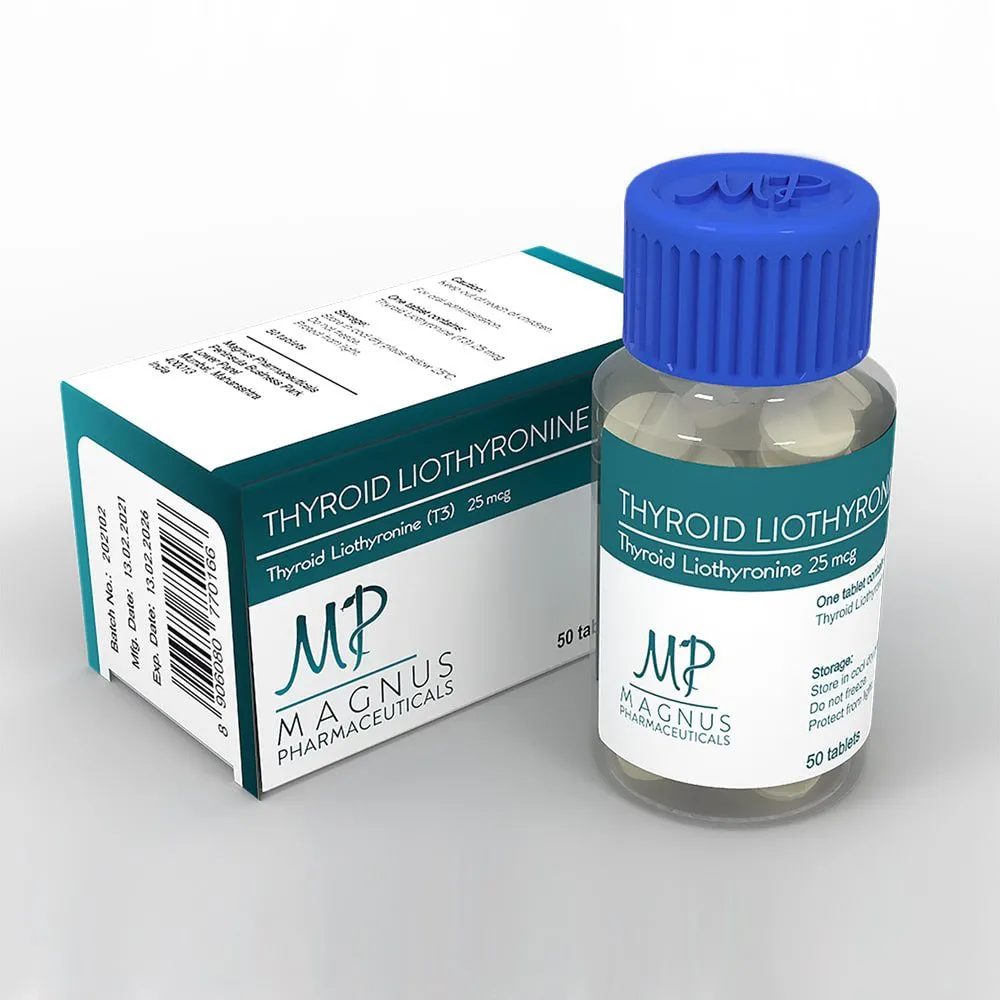
Fat Burner / Thermogenic
liothyronine
Liothyronine, commonly referred to as T3 or Liothyronine Sodium, is the active triiodothyronine hormone used in research settings to modulate metabolic rate. Classified as a thermogenic agent, it is distinct from anabolic steroids, acting directly on thyroid receptors rather than androgen receptors. In athletic research contexts, it is primarily utilized during cutting phases to enhance caloric expenditure and facilitate fat loss. Because it is a potent hormone, users typically run low micro-doses to avoid the significant cardiovascular and metabolic risks associated with supraphysiological levels. This compound requires careful monitoring, as it does not follow the standard PCT protocols of steroids but demands strict blood-work surveillance to prevent thyroid suppression and cardiac strain.
Drug Class
Fat Burner / Thermogenic
All Products
1 products
Legal status
Prescription-only medicine (Rx)
All Products — liothyronine
How Liothyronine Works
Liothyronine is the biologically active form of thyroid hormone, binding directly to nuclear thyroid receptors in target tissues. Unlike T4, which must be converted, T3 acts immediately to upregulate the basal metabolic rate (BMR). This mechanism increases cellular oxygen consumption and heat production, a process known as thermogenesis. In research applications, this heightened metabolic state accelerates the breakdown of stored energy substrates. However, the effect is dose-dependent and non-selective; it increases metabolic demand in all tissues, including the heart and skeletal muscle. Users report that the thermogenic effect is potent even at low doses, making it a powerful tool for manipulating energy balance. The half-life of Liothyronine is approximately 1 to 2 days, allowing for relatively rapid adjustment of dosage if side effects emerge. It does not suppress the hypothalamic-pituitary-thyroid (HPT) axis as aggressively as T4 at equivalent metabolic outputs, but high doses can still lead to negative feedback loops that suppress endogenous TSH production.
Typical Research Applications
In performance research, Liothyronine is almost exclusively applied during cutting or recomposition cycles. It is rarely used during bulking phases due to the catabolic risk associated with elevated metabolic rates. Athletes typically introduce T3 in the final weeks of a cut to break through plateaus in fat loss. It is often stacked with other thermogenic compounds or used in isolation for those sensitive to stimulants. The primary goal is to increase caloric expenditure without significantly increasing appetite, although some users report increased hunger. It is not a fat burner in the sense of directly targeting adipose tissue, but rather a metabolic accelerator that forces the body to burn more calories at rest. Research protocols often pair it with strict caloric deficits to maximize efficacy. Because it affects muscle protein turnover, users must ensure adequate protein intake to mitigate potential catabolic effects on lean mass. It is not a substitute for training or diet, but a pharmacological adjunct to metabolic stress.
Dosage Ranges + Cycle Length
Dosage for Liothyronine is highly individualized and must be titrated carefully. Typical research doses range from 25 mcg to 50 mcg per day, divided into two doses to maintain stable blood levels. Starting at 12.5 mcg is common for sensitive individuals. Cycle length is generally short, ranging from 4 to 8 weeks, due to the risk of receptor downregulation and HPT axis suppression. Users report that doses above 50 mcg/day offer diminishing returns for fat loss while significantly increasing the risk of cardiac arrhythmias and anxiety. It is crucial to monitor TSH, Free T3, and Free T4 levels via blood work every 2-3 weeks. Tapering off the compound gradually over 1-2 weeks is recommended to allow the HPT axis to recover. There is no standard PCT for thyroid hormones, but restoring normal thyroid function through diet and rest is essential. Exceeding these ranges is considered dangerous and is not supported by safety data in athletic populations.
Side Effects + Safety Considerations
The side effect profile of Liothyronine is directly related to its potency. Common effects include increased heart rate, palpitations, anxiety, insomnia, and heat intolerance. More severe risks include cardiac arrhythmias, atrial fibrillation, and significant loss of lean muscle mass if protein intake is insufficient. Hepatotoxicity is not a primary concern with T3, unlike oral anabolic steroids, but cardiovascular strain is a major safety issue. Users must be over 21 and have a clean cardiovascular history before considering use. Regular blood work is mandatory to track thyroid function; suppressed TSH can lead to long-term bone density loss and cardiac remodeling. Contraindications include pre-existing heart conditions, hyperthyroidism, and uncontrolled hypertension. It is not recommended for beginners or those with poor baseline metabolic health. Discontinuation should be immediate if chest pain or severe palpitations occur. This compound is a hormone, not a supplement, and requires the same respect and caution as prescription medications.
Mechanism of action
Liothyronine binds to nuclear thyroid receptors, upregulating basal metabolic rate and cellular oxygen consumption to increase thermogenesis and caloric expenditure.
Questions & answers
Is Liothyronine safe for long-term use?
No, long-term use is not recommended due to the risk of HPT axis suppression, bone density loss, and cardiac strain. Cycles should be short, and blood work must be monitored regularly to prevent permanent thyroid dysfunction.
Does Liothyronine suppress natural testosterone production?
Liothyronine does not directly suppress testosterone production. However, the metabolic stress and potential catabolic effects can indirectly impact hormonal balance if caloric intake or sleep is inadequate during the cycle.
Can Liothyronine be stacked with anabolic steroids?
Yes, it is commonly stacked with anabolic steroids during cutting phases. However, the combination increases cardiovascular strain, so users must monitor heart rate and blood pressure closely. Doses of T3 should be kept low when stacked.
What is the difference between T3 and T4?
T3 is the active thyroid hormone, while T4 is the inactive precursor that must be converted to T3. T3 acts faster and is more potent, making it more effective for acute metabolic changes but also more likely to cause side effects.
How quickly does Liothyronine start working?
Effects are typically felt within 24 to 48 hours of the first dose, with peak metabolic effects occurring after several days of consistent use. Users should monitor their response closely and adjust dosage as needed.
Related fat burner / thermogenics
Cardarine
Cardarine is the active compound in 1 product in the SynthesisGear catalogue (also known a…
View →Clenbuterol
Clenbuterol is the active compound in 5 products in the SynthesisGear catalogue (also know…
View →Clenbuterol Hydrochloride
Clenbuterol Hydrochloride is the active compound in 1 product in the SynthesisGear catalog…
View →drostanolone
drostanolone is the active compound in 1 product in the SynthesisGear catalogue (also know…
View →