
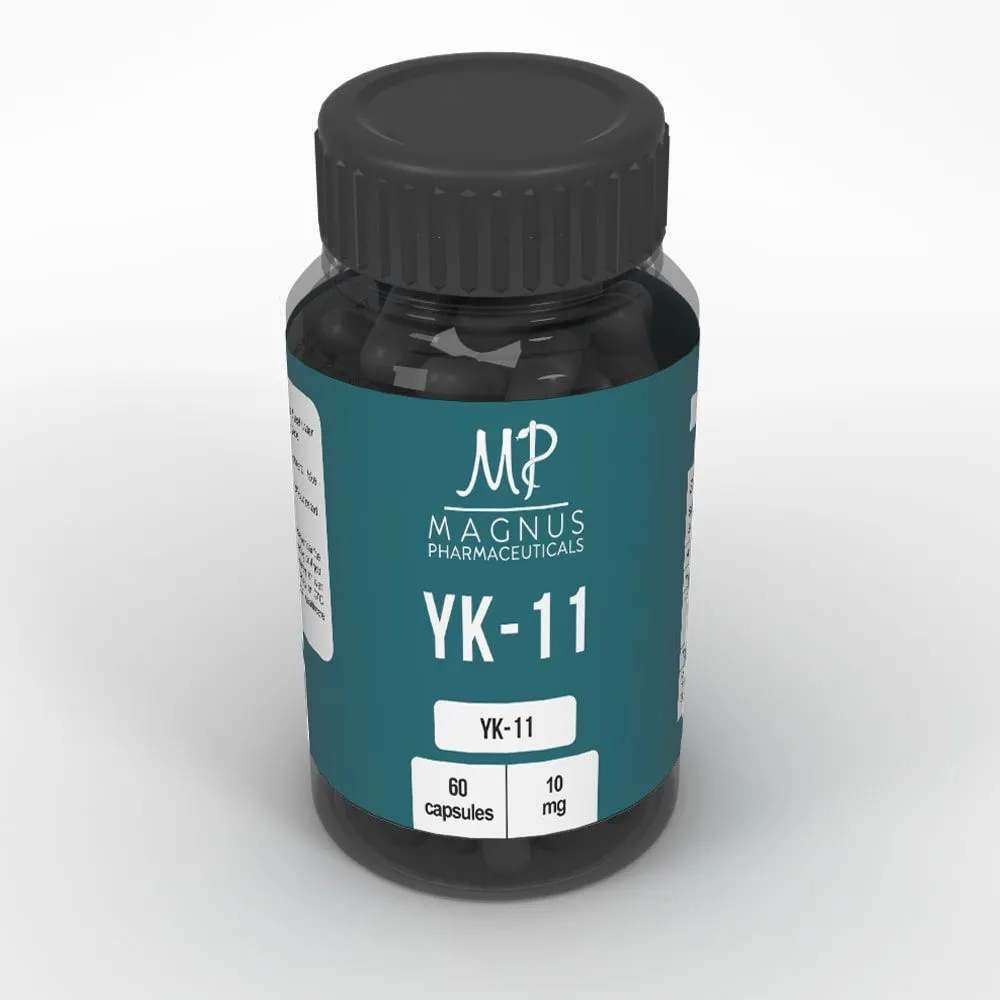
Anabolic Steroid (Oral)
YK 11
YK 11 is a synthetic myostatin inhibitor that has gained significant attention in performance research circles. Unlike traditional SARMs that primarily target androgen receptors, YK 11 works by blocking the myostatin protein, which naturally limits muscle growth. This unique mechanism makes it a subject of interest for athletes exploring myostatin inhibition for muscle preservation and hypertrophy. While often confused with compounds like Ostarine or Ligandrol due to marketing overlap, YK 11 operates through a distinct biological pathway. Research into this compound focuses on its potential to enhance lean mass and strength without the typical androgenic side effects associated with steroids. As with all research compounds, data is limited, and users should approach experimentation with caution and thorough understanding of the risks involved.
Drug Class
Anabolic Steroid (Oral)
All Products
1 products
Legal status
Research compound (not FDA approved)
All Products — YK 11
How YK 11 Works Mechanistically
YK 11 functions as a myostatin inhibitor, a protein that acts as a negative regulator of muscle growth. By binding to or interfering with myostatin activity, YK 11 may allow for increased muscle protein synthesis and reduced muscle degradation. This is distinct from SARMs like Ostarine, which bind to androgen receptors. The primary goal of myostatin inhibition is to lift the natural cap on muscle size, potentially leading to greater hypertrophy. However, the exact pharmacokinetics and binding affinity of YK 11 in humans are not fully established. Research suggests it may influence the TGF-beta signaling pathway, which is critical in controlling muscle mass. Because it does not rely on androgen receptors, it may offer a different side-effect profile, though this is not guaranteed. Understanding this mechanism is crucial for researchers aiming to optimize muscle growth pathways without traditional androgenic exposure.
Typical Research Applications
In research settings, YK 11 is primarily investigated for its potential in muscle hypertrophy and strength gains. Athletes and researchers often explore it during cutting phases to preserve lean mass while in a caloric deficit. It is also studied for its potential to enhance strength output, as myostatin inhibition may improve muscle fiber recruitment. Unlike bulking agents, YK 11 is often viewed as a recomp or maintenance tool. Some protocols combine it with other agents to maximize lean mass retention. However, due to limited human data, most applications are experimental. Researchers are particularly interested in how it interacts with other performance enhancers. It is not typically used for PCT or hormonal recovery. The focus remains on its unique ability to potentially increase muscle cap beyond normal limits, making it a subject of ongoing study in performance research.
Dosage Ranges and Cycle Length
Due to the lack of standardized clinical trials, dosage protocols for YK 11 are largely anecdotal. Commonly cited doses in community research range from 5 mg to 15 mg per day. Most protocols suggest a cycle length of 8 to 12 weeks. Intermediate users often start at the lower end, around 5 mg, to assess tolerance. Advanced users may increase to 10-15 mg, but this is not well-documented. It is crucial to note that these figures are not medically validated. Users should monitor their response closely. Splitting the dose may be considered for stability, though data is sparse. Consistency is key in research protocols. Always source from reputable suppliers to ensure purity. Remember that individual responses vary significantly. Adjusting dosage based on personal feedback is common in research cycles. Do not exceed recommended ranges without professional guidance.
Side Effects and Safety Considerations
While YK 11 is not an androgen, it is not without potential risks. Users report side effects such as joint pain, headaches, and fatigue. Because it inhibits myostatin, there is a theoretical risk of excessive muscle growth, which could strain tendons and joints. Joint pain is a commonly cited concern in anecdotal reports. There is no established PCT protocol for YK 11, as it does not suppress the HPT axis in the same way as androgens. However, blood work is still recommended to monitor overall health. Hepatotoxicity is not a primary concern, but liver function should be checked. Age 21+ is a standard prerequisite for research use. Always consult with a healthcare provider before starting any research protocol. Monitor for any adverse reactions and discontinue use if necessary. Safety should always be the priority in experimental research.
Mechanism of action
YK 11 acts as a myostatin inhibitor, blocking the negative regulator of muscle growth to potentially enhance hypertrophy and strength without direct androgen receptor binding.
Questions & answers
Is YK 11 a SARM or a myostatin inhibitor?
YK 11 is primarily classified as a myostatin inhibitor, not a traditional SARM. While it is often grouped with SARMs in marketing, its mechanism of action involves blocking myostatin rather than binding to androgen receptors, making it pharmacologically distinct.
What is the recommended dosage for YK 11 research?
Commonly cited research dosages range from 5 mg to 15 mg per day. Most protocols suggest starting at 5 mg to assess tolerance before potentially increasing the dose. These figures are anecdotal and not clinically validated.
Does YK 11 require a post-cycle therapy (PCT)?
YK 11 does not typically suppress the hypothalamic-pituitary-gonadal axis like androgens do, so a traditional PCT is not usually required. However, monitoring overall health and hormone levels is still advisable during and after use.
How does YK 11 compare to Ostarine or Ligandrol?
YK 11 works by inhibiting myostatin, whereas Ostarine and Ligandrol are SARMs that bind to androgen receptors. This means YK 11 targets muscle growth limits directly, while SARMs mimic testosterone effects on muscle tissue.
What are the common side effects of YK 11?
Users report side effects such as joint pain, headaches, and fatigue. Joint pain is particularly noted due to the potential for rapid muscle growth straining connective tissues. Individual responses vary, so monitoring is essential.
Related anabolic steroid (oral)s
17α‑Methyl‑dihydrotestosterone
17α‑Methyl‑dihydrotestosterone is the active compound in 1 product in the SynthesisGear ca…
View →4‑Chlorodehydromethyl Testosterone
4‑Chlorodehydromethyl Testosterone is the active compound in 2 products in the SynthesisGe…
View →Anadrol
Anadrol is the active compound in 2 products in the SynthesisGear catalogue (also known as…
View →Anavar
Anavar is the active compound in 3 products in the SynthesisGear catalogue (also known as …
View →