
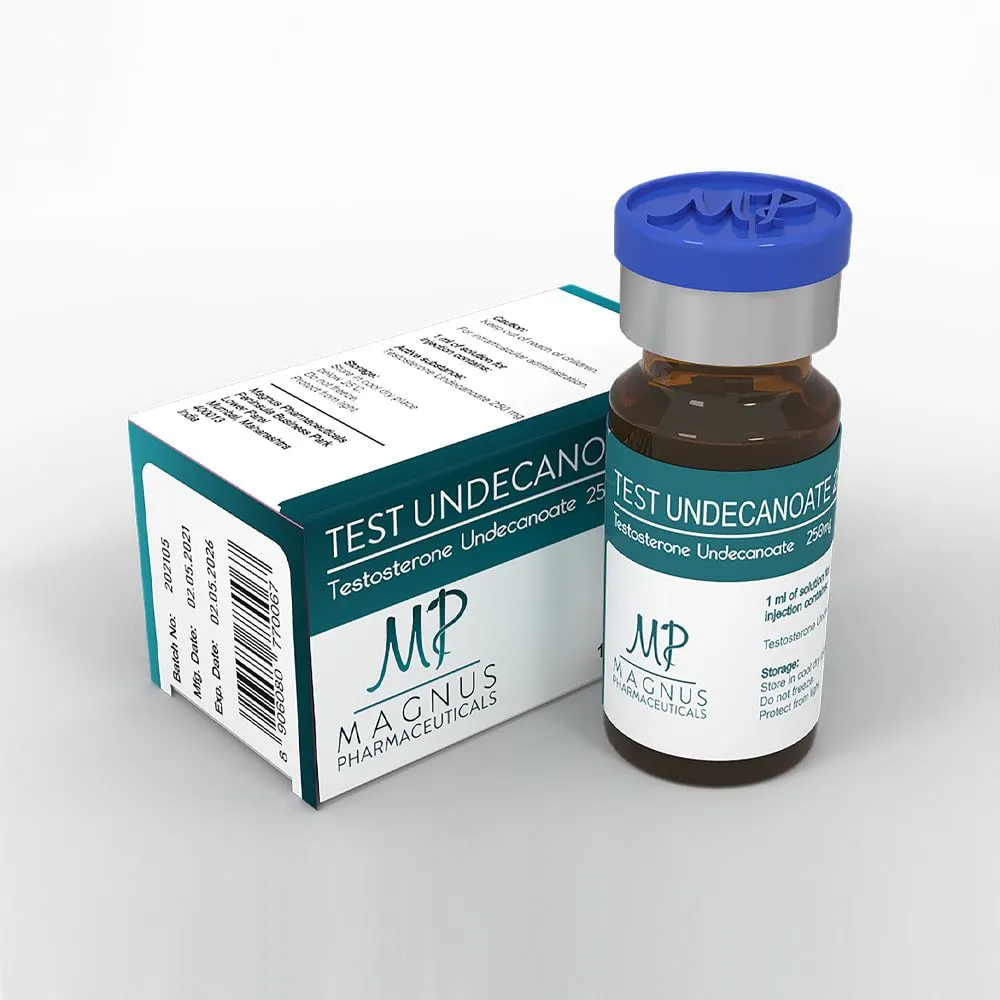
Anabolic Steroid (Oral)
Testosterone Undecanoate
Testosterone Undecanoate is a long-acting ester of testosterone, classified as an injectable anabolic steroid. Due to its extended half-life, it is primarily utilized in research settings for maintaining stable serum levels with minimal injection frequency. Athletes and performance researchers often select this compound for its convenience and sustained release profile. Brands such as Acestra and Depo‑Testosterone are commonly cited in community protocols. This page outlines the pharmacological profile, typical usage patterns, and safety considerations for educational purposes. Users should note that individual responses vary, and professional medical supervision is recommended for any hormonal research.
Drug Class
Anabolic Steroid (Oral)
All Products
1 products
Legal status
Research compound (not FDA approved)
All Products — Testosterone Undecanoate
How Testosterone Undecanoate Works
Testosterone Undecanoate functions by binding to androgen receptors in target tissues, mimicking the effects of natural testosterone. The undecanoate ester is a long-chain fatty acid that significantly slows the hydrolysis of the molecule in the bloodstream. This modification extends the elimination half-life, allowing for sustained therapeutic levels over several weeks. Unlike shorter esters, it does not require frequent dosing to maintain baseline hormone levels. The compound is converted to active testosterone after the ester is cleaved. This slow-release mechanism helps mitigate the peak-and-trough hormonal fluctuations associated with shorter-acting esters. Users report that this stability supports consistent physiological responses without the rapid spikes seen in other formulations. The pharmacokinetics of Testosterone Undecanoate make it distinct in its dosing schedule and metabolic profile.
Typical Research Applications
In athletic and research contexts, Testosterone Undecanoate is frequently used as a base compound for bulking cycles. Its long duration of action makes it suitable for individuals seeking to minimize injection frequency while maintaining anabolic effects. It is also employed in recomposition phases where stable hormone levels are prioritized over rapid peak effects. Some users incorporate it into post-cycle therapy (PCT) protocols, although its long half-life requires careful timing to avoid prolonged suppression. Because it is a pure testosterone ester, it is often stacked with other compounds to enhance specific goals. Athletes typically run this compound during off-seasons to support mass and strength gains. The convenience of Testosterone Undecanoate appeals to those who cannot commit to daily or twice-weekly injections. Research indicates that consistent levels may support better nitrogen retention and muscle protein synthesis over time.
Dosage Ranges and Cycle Length
Standard research protocols for Testosterone Undecanoate typically range from 400 mg to 1000 mg per injection. Due to its long half-life, injections are administered every 10 to 14 days. A common starting dose for intermediate users is 500 mg every 10 days. Advanced users may increase the dose to 800 mg or 1000 mg every 10 to 12 days, depending on individual tolerance. Cycle lengths often extend from 12 to 24 weeks, reflecting the slow onset and offset of the compound. It is crucial to note that the long half-life means effects persist long after the final injection. Users should plan their cycles accordingly to account for the extended clearance period. Dosing consistency is vital to maintain stable blood levels. The specific dosage of Testosterone Undecanoate should be adjusted based on individual response and research objectives.
- Intermediate: 500 mg every 10 days
- Advanced: 800 mg every 10 days
- High: 1000 mg every 10-12 days
- Typical cycle: 12-24 weeks
Side Effects and Safety Considerations
Like all androgens, Testosterone Undecanoate carries a risk of side effects including acne, hair loss, and lipid profile changes. The long half-life means that any adverse reactions may persist for weeks after discontinuation. Hepatotoxicity is not a primary concern with injectable esters, but liver function should still be monitored. Users must be aware of the risk of testicular atrophy and natural testosterone suppression. Post-cycle therapy is essential to restore endogenous production, but the timing must account for the slow clearance of the ester. Blood work is recommended before, during, and after use to monitor hematocrit, liver enzymes, and hormone levels. Individuals over 21 are the typical demographic for such research. Safety protocols for Testosterone Undecanoate require careful planning and medical oversight to mitigate risks.
Mechanism of action
Testosterone Undecanoate acts as a prodrug, slowly releasing active testosterone after ester hydrolysis to sustain androgen receptor activation and anabolic signaling over an extended period.
Questions & answers
How often should Testosterone Undecanoate be injected?
Most research protocols suggest injecting Testosterone Undecanoate every 10 to 14 days. This frequency aligns with its long half-life, ensuring stable blood levels without the need for daily or twice-weekly dosing.
What is the typical starting dose for beginners?
A common starting dose for intermediate users is 500 mg per injection. Beginners should start at the lower end of the range to assess individual tolerance and response before considering higher doses.
Can Testosterone Undecanoate be used for cutting?
While primarily used for bulking, some users incorporate Testosterone Undecanoate into cutting cycles. Its stable levels may help preserve muscle mass during caloric deficits, though other esters are often preferred for faster adjustments.
How long does it take to leave the system?
Due to its long half-life, Testosterone Undecanoate can remain in the system for several weeks after the final injection. Users should account for this extended clearance period when planning post-cycle therapy.
Is blood work necessary during use?
Yes, regular blood work is strongly recommended to monitor hematocrit, liver enzymes, and hormone levels. This helps ensure safety and allows for timely adjustments to the research protocol if adverse changes are detected.
Related anabolic steroid (oral)s
17α‑Methyl‑dihydrotestosterone
17α‑Methyl‑dihydrotestosterone is the active compound in 1 product in the SynthesisGear ca…
View →4‑Chlorodehydromethyl Testosterone
4‑Chlorodehydromethyl Testosterone is the active compound in 2 products in the SynthesisGe…
View →Anadrol
Anadrol is the active compound in 2 products in the SynthesisGear catalogue (also known as…
View →Anavar
Anavar is the active compound in 3 products in the SynthesisGear catalogue (also known as …
View →