
Anabolic Steroid (Injectable)
Testosterone Propionate
Testosterone Propionate is a short-ester injectable anabolic steroid derived from natural testosterone. Due to its rapid absorption and short half-life, it is a staple in research protocols requiring precise hormonal control. Athletes and researchers often select this compound for its quick onset of action and predictable clearance. Common brand names in the research market include Testopel and Testodex. While it offers the same androgenic benefits as other testosterone esters, its pharmacokinetic profile demands a different injection frequency. This guide outlines the pharmacology, typical usage patterns, and safety considerations for this specific ester, focusing on data relevant to performance research and educational purposes.
Drug Class
Anabolic Steroid (Injectable)
All Products
4 products
Legal status
Prescription-only medicine (Rx)
All Products — Testosterone Propionate
Injectable Steroids
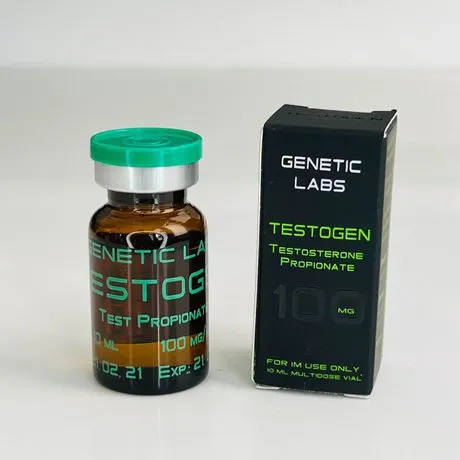
Testogen 10ml/100mg Testosterone Propionate – Genetic Labs
Genetic Labs
€42.57 €47.30
Save €5.00
How Testosterone Propionate Works
Testosterone Propionate functions by binding to androgen receptors in target tissues, primarily skeletal muscle and bone. Once bound, the complex enters the cell nucleus to modulate gene expression, leading to increased protein synthesis and nitrogen retention. The propionate ester is a short-chain fatty acid attached to the 17-beta hydroxyl group of the testosterone molecule. This modification slows the release of the active hormone into the bloodstream compared to unesterified testosterone, but remains significantly faster than longer esters like cypionate or enanthate. Users report that Testosterone Propionate achieves peak serum levels within 24 to 48 hours of injection. Because the ester is hydrolyzed quickly by esterases, the active testosterone is cleared from the system rapidly. This short half-life results in more pronounced fluctuations in blood levels between doses, which is why frequent administration is necessary to maintain stable hormonal concentrations. The rapid clearance also allows for quicker adjustments in dosing if side effects emerge.
Typical Research Applications
In performance research and athletic contexts, Testosterone Propionate is frequently utilized for its ability to provide a rapid anabolic response. It is often chosen by researchers who want to minimize the time the compound remains in the system, which can be advantageous for specific testing windows or when stacking with other compounds. It is commonly used in cutting cycles to maintain muscle mass and strength while in a caloric deficit. Some athletes also use it as a base compound in bulking cycles, though the high injection frequency can be a logistical challenge. Due to its short half-life, it is less commonly used for long-term maintenance therapy compared to longer esters, but it remains popular for short-term studies or when rapid onset is required. Users report that the quick feedback loop allows for better monitoring of individual response to the hormone. It is also sometimes employed in post-cycle therapy (PCT) scenarios, though this is less common due to the need for frequent injections during the recovery phase.
Dosage Ranges and Cycle Length
Dosing for Testosterone Propionate is typically calculated on a weekly basis to ensure consistent blood levels. For intermediate users, a common range is 100 mg to 200 mg per day, administered via intramuscular injection. This equates to a weekly total of 700 mg to 1400 mg. Advanced users may increase this to 200 mg to 300 mg per day, resulting in a weekly total of 1400 mg to 2100 mg. It is critical to maintain strict arithmetic consistency between daily and weekly figures. For example, 100 mg daily is exactly 700 mg per week. Cycle lengths typically range from 6 to 12 weeks. Due to the short half-life, injections are usually performed every other day or daily to prevent significant dips in serum testosterone. Some protocols involve injecting 50 mg to 100 mg daily to smooth out peaks and troughs. Users should monitor blood work regularly to adjust doses based on individual metabolic response and to ensure levels remain within the desired therapeutic or performance range.
Side Effects and Safety Considerations
Like all exogenous androgens, Testosterone Propionate carries a risk of side effects, including estrogenic issues such as gynecomastia and water retention, which are managed with aromatase inhibitors if necessary. Androgenic side effects like acne, oily skin, and potential hair loss are also common. Because the compound suppresses natural testosterone production, a proper Post Cycle Therapy (PCT) is essential to restore the hypothalamic-pituitary-gonadal axis. Users must undergo regular blood work to monitor hematocrit, lipid profiles, and liver enzymes, although testosterone is not 17-alpha-alkylated and is generally less hepatotoxic than oral steroids. The frequent injection schedule can lead to injection site irritation or abscesses if hygiene is not maintained. Individuals under 21 or those with pre-existing cardiovascular conditions should avoid use. It is crucial to source compounds from reputable suppliers to ensure purity and correct concentration, as contaminated products pose significant health risks.
Mechanism of action
Testosterone Propionate binds to androgen receptors to modulate gene expression, promoting protein synthesis and nitrogen retention, with its short ester chain facilitating rapid absorption and clearance from the bloodstream.
Questions & answers
How often should Testosterone Propionate be injected?
Due to its short half-life, Testosterone Propionate is typically injected every other day or daily. Daily injections of lower doses help maintain more stable blood levels and reduce the peaks and troughs associated with less frequent administration.
What is the typical weekly dose for research purposes?
Common research protocols range from 700 mg to 1400 mg per week for intermediate users, and up to 2100 mg per week for advanced users. These figures are derived from daily doses of 100 mg to 300 mg, ensuring arithmetic consistency between daily and weekly totals.
Is Testosterone Propionate suitable for beginners?
It is generally not recommended for beginners due to the high frequency of injections required. Longer esters like Testosterone Enanthate or Cypionate are often preferred for initial cycles because they allow for less frequent administration, making them easier to manage for new users.
Does Testosterone Propionate require PCT?
Yes, any cycle involving exogenous testosterone will suppress natural production. A Post Cycle Therapy (PCT) protocol is necessary after the cycle ends to help restore the body's natural testosterone production and hormonal balance.
How does Propionate compare to Enanthate?
Testosterone Propionate has a much shorter half-life than Enanthate, requiring more frequent injections. However, it clears from the system faster, which some researchers prefer for specific protocols. The anabolic and androgenic effects are identical, as both are forms of testosterone.
Related anabolic steroid (injectable)s
Boldenone
Boldenone is the active compound in 1 product in the SynthesisGear catalogue (also known a…
View →Boldenone undecylenate
Boldenone undecylenate is the active compound in 3 products in the SynthesisGear catalogue…
View →Butyrate
Butyrate is the active compound in 1 product in the SynthesisGear catalogue (also known as…
View →Drostanolone enanthate
Drostanolone enanthate is the active compound in 4 products in the SynthesisGear catalogue…
View →